Reconnecting with nature
Marais de Tasdon, nature in the city
A peaceful bubble of nature, the Marais de Tasdon flourishes just a few minutes by bike from the Old Port. This pocket of countryside within the city plays a vital environmental role and is home to a rich and valuable biodiversity. Following major renaturation work in 2021, this vibrant and protected area, now featuring 15 km of developed trails, hosts more than 200 plant and animal species.
A biodiversity hotspot in the heart of the city
Thanks to the renaturation work carried out in recent years, the Marais de Tasdon is now a vibrant and protected environment, to be explored all year round, as the seasons change, colors shift, flowers bloom, and wildlife comes to take refuge—or sets off on new adventures.
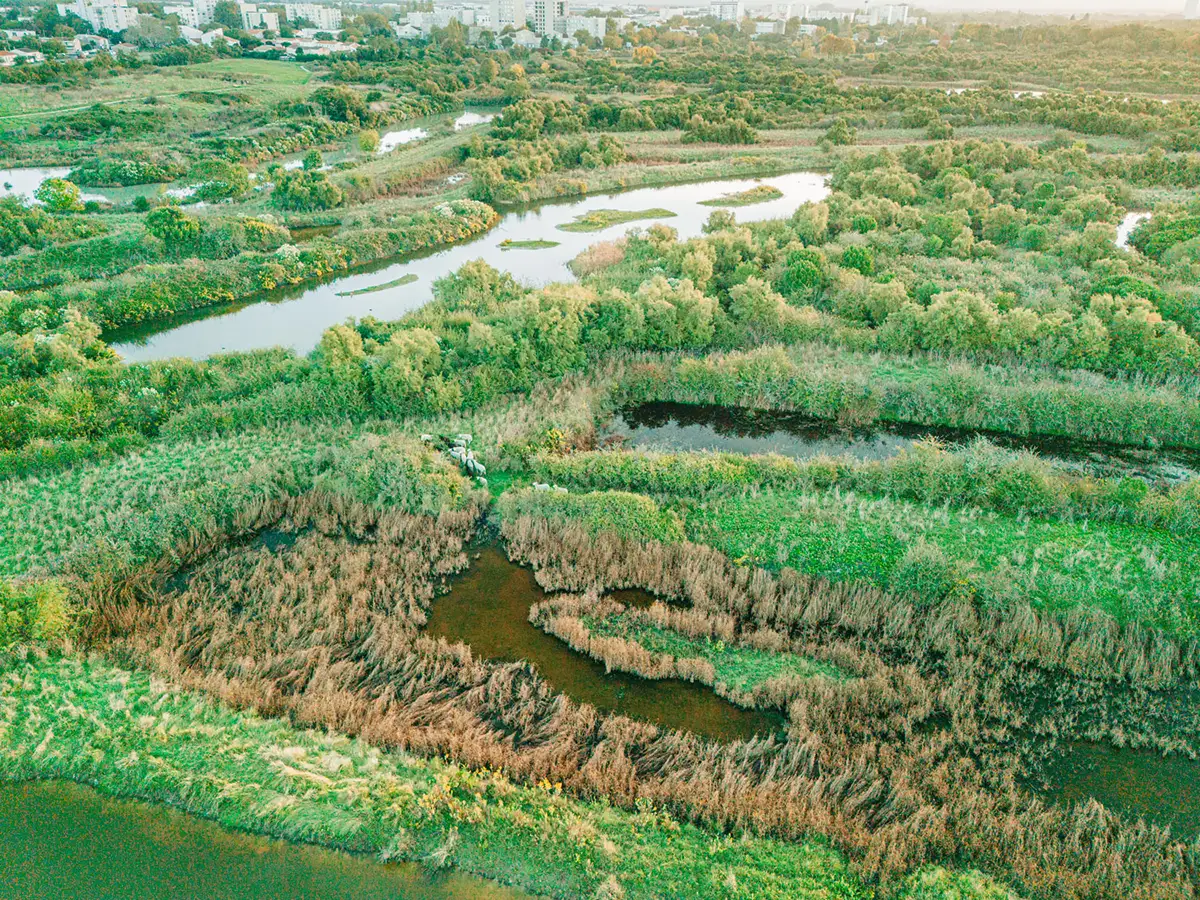
A place steeped in history, between fresh water and salt water
Located on former salt marshes dating back to the Middle Ages, the Marais de Tasdon is a former coastal bay that was used for salt production until 1935 and for cattle grazing until 1960. In 1962, with the construction of the Moulinette dam, the marsh was cut off from the sea.
During the 1970s, it was partially filled in to make way for the Villeneuve-les-Salines neighborhood.
This fragile ecosystem was gradually degraded by stagnant water, collapsing banks, and the spread of invasive plant and animal species.
In response, a large-scale restoration project was launched in January 2020 to "renature" nearly 83 hectares of the site, restoring its original ecological, regulatory, and protective functions.
Today, the marsh plays a key role in maintaining the balance between brackish, fresh, and salt water—regulated through a system of locks, islets, gates, basins, and canals.
Exceptional flora and fauna
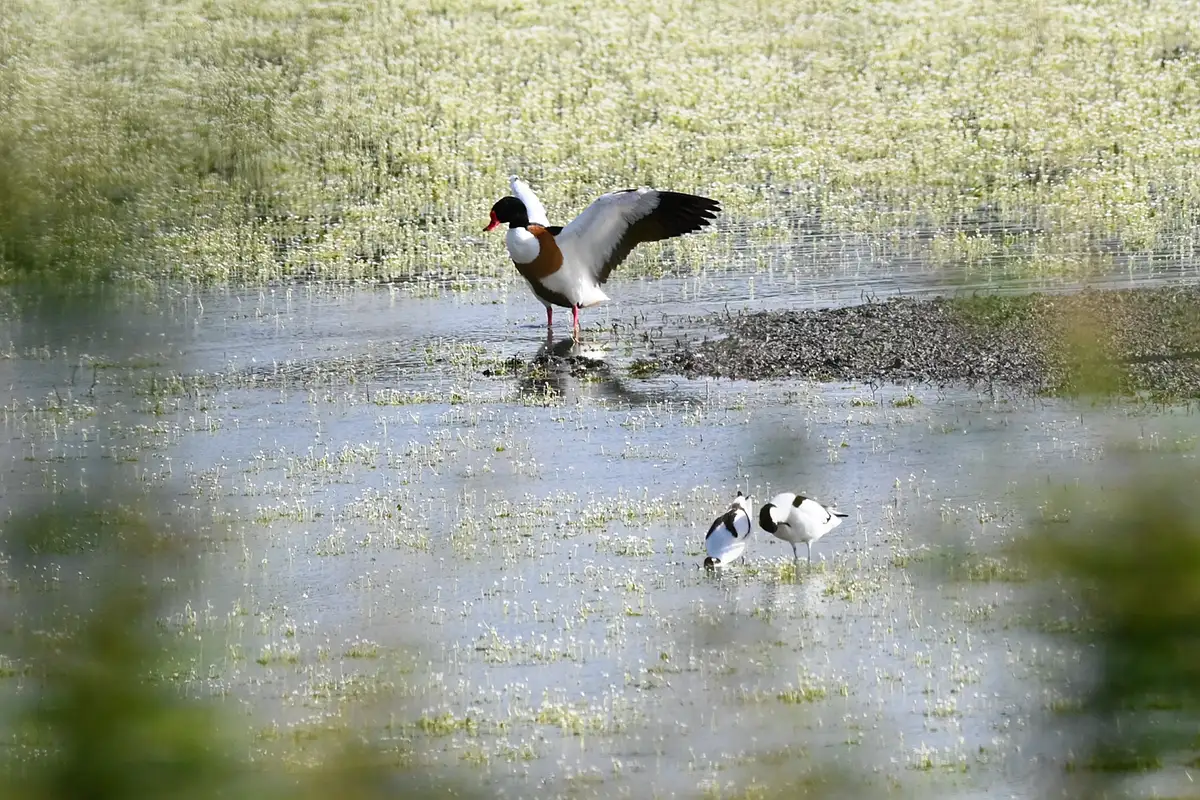
At the heart of its 124 hectares, the Marais de Tasdon boasts remarkable ecological wealth. Its location—between the marshes of Rochefort, the Marais Poitevin, and the nature reserves of Yves and Aiguillon—makes it a key stopover for migratory birds. But that’s not all!
An exceptional biodiversity now thrives in this marshland:
- 154 bird species (including the pied avocet, black-winged stilt, little ringed plover, green sandpiper, common snipe, little grebe, common shelduck, and more)
- 20 mammal species (such as the otter, fox, and pipistrelle bat)
- 15 fish species, including the eel, a species protected at the European level
- 8 amphibian species (like the Mediterranean tree frog, parsley frog, marbled newt, etc.)
- Several hundred insect species (dragonflies, butterflies, etc.)
- A few reptiles (such as the western whip snake, grass snake, and green lizard)
Incredible for a marsh located just at the edge of the city center, right? But there's more!
Numerous plant species also thrive here, some of them rare: reeds and tamarisks (including marsh iris and saltmarsh bulrush), several types of orchids (such as the bee orchid), Foucaud's water dropwort (a European-protected umbellifer), Baudot's buttercup, and others.
To further enrich this vibrant ecosystem, 63,000 aquatic plants have been replanted along the banks and islets of the marsh and the Moulinette, helping natural vegetation reclaim its space.
Nature walk along the raised boardwalks
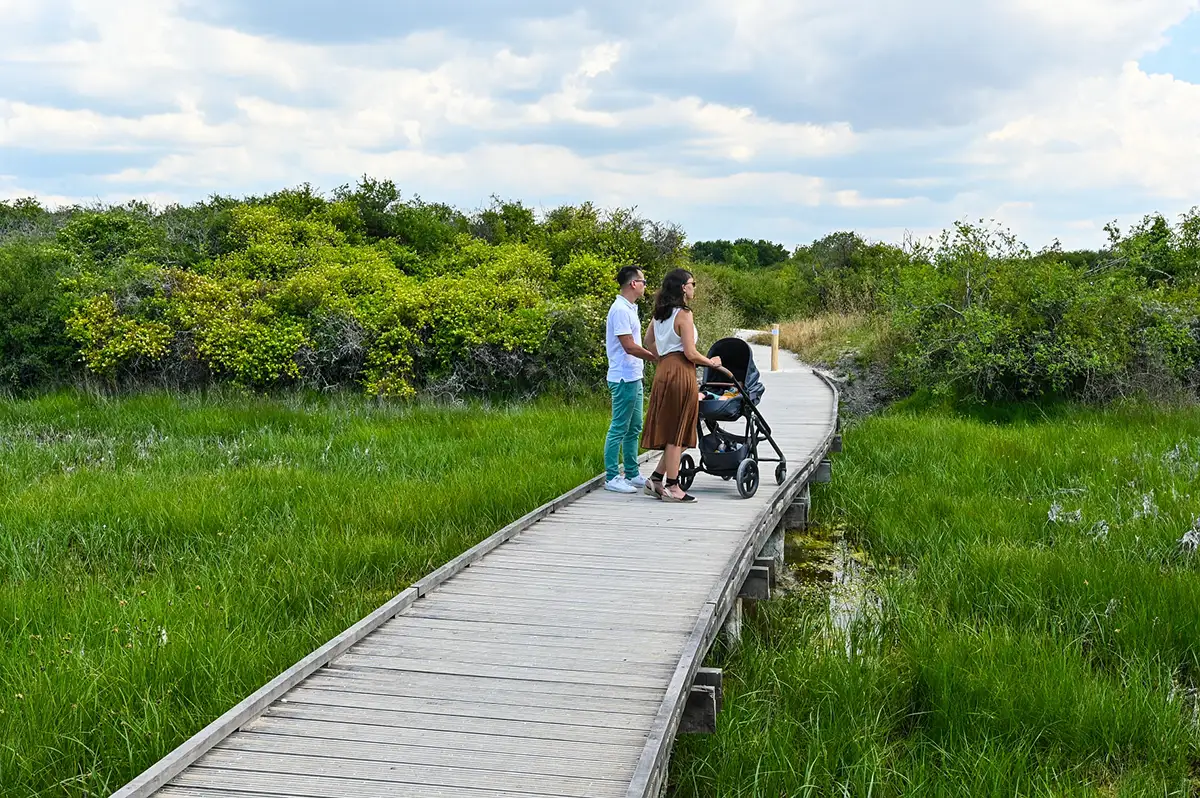
Fifteen kilometers of trails wind through the marsh and its surroundings, including 3 kilometers reserved exclusively for pedestrians in its heart. A 5-kilometer hiking loop, officially approved by the FFRandonnée, is even accessible to all.
Twelve raised footbridges invite visitors to stroll above the water basins, without disturbing the peaceful life of the marsh.
As you walk, interpretive panels reveal more about the site's history and how it works.
Highlight of the walk: a 6-meter-high observation tower offering breathtaking views of the marsh. Sounds like the perfect time to pull out your binoculars, doesn’t it?
More than a walk, a sensory awakening
A walk through the heart of this marsh quickly becomes a soothing escape into nature. Why not play along and awaken ALL your senses?
Open your eyes… Along the trails and near the water, wild vegetation shelters otters, rabbits, tree frogs, and even foxes. Stay alert—they’re quick!
Tune in your ears… Listen carefully to the wind tickling the leaves, the birdsong, the whispering of insects, and the bubbles popping on the water’s surface...
With your fingertips… Gently brush against the plants—feel the softness of leaves and flowers. And if you lift a finger, who knows? A butterfly or dragonfly might just land on it.
Lift your nose… Inhale the scents of flowers and plants: subtle, fresh, sweet, peppery… A true feast for the senses!
Taste… or picnic! Take a break on a bench or in a quiet, shady spot surrounded by greenery and enjoy a delicious moment of calm.
Spotlight on… Simple actions and the right attitudes to adopt
It’s important to follow the signage on site in order to share this space respectfully with all visitors.
- Pedestrians must stay on the designated paths. Access to the islets is strictly prohibited for everyone, including anglers.
- Bicycles and dogs (even on a leash) are not allowed inside the marsh, as they can disturb birds and flightless chicks.
- Cyclists should remain on the bike paths and trails surrounding the marsh.
- Cyclists are advised to dismount on footbridges accessible by bike, as these are generally located on trails where cycling is not permitted.
Creating an educational project around the Marais de Tasdon
That’s possible thanks to the Relais Nature de La Moulinette, a space entirely dedicated to raising young people's awareness about environmental protection.
Each year, it welcomes students from CM1 to 6ème (4th to 6th grade) for fun, hands-on outings immersed in nature, all centered around the creation of a collaborative project.
The Marais de Tasdon offers countless opportunities for exploration: small wildlife, local plant life, the ecosystem of a wetland, how a salt marsh works... Children will need to keep their eyes and ears wide open. So they can tell their families everything they’ve learned and observed!
Follow the guide… or don’t!
Guided or completely free, explore the marsh at your own pace.
Group guided tour: “La Rochelle: its salt marshes from the Middle Ages to the present day”
On foot, along the water and winding trails, your guide will reveal the history of this marsh, once used for salt production, that underwent major renaturation work in 2021 to restore its vitality and ecological role as a “blue carbon sink.” Join this tour during the All Saints' holiday break.
Private guided tour
Looking to enjoy a special visit on your own, with family, or friends? It's possible with our private guided tours!
Plan your own private tour on the date and time of your choice (subject to availability) by contacting the Groups Department at the Tourist Office.
Self-guided visit: how to get to the Marais de Tasdon?
The Marais de Tasdon is located between the towns of Aytré and La Rochelle.
From the Old Port, it’s accessible on foot, by bike, or even by bus!
Head up Quai Maubec, cross the railway bridge (Pont Jean Moulin), and continue to the former Exhibition Center. Cross over to join the combined bike and pedestrian path toward Villeneuve-les-Salines. And there you are, at the entrance to this wetland area, marked by the Moulinette canal.

Written by
Alison Boissard