From Ré Island to Vendée, a wine territory in full revival
The vineyards around La Rochelle
In La Rochelle and its surrounding area, the winemaking tradition dates back at least to the Middle Ages. In recent years, wine production has seen a revival: grapes are no longer used solely for distillation and cognac-making. Just a few kilometers from the coastal city, on the islands or further inland, promising estates await curious visitors and lovers of unique wines, offering a rich and growing wine tourism experience.
A bit of history
In Charentes, and particularly in the Saintonge area, wine has been produced since Gallo-Roman times. But it was in the Middle Ages that viticulture truly flourished, when major abbeys began planting extensive vineyards. Under the rule of Eleanor of Aquitaine and Henry II Plantagenet, wines from Aunis and Saintonge began to be exported to England and Northern Europe via the ports along the Charente coast. At that time, the Charente River was busy with “gabares,” the flat-bottomed boats used to transport wine to the ocean.
Renowned across Europe
Strong demand led to vineyards expanding inland, especially along the left bank of the Charente River, south of Cognac. By the late Middle Ages, La Rochelle had become the main wine export port on the Atlantic coast. Around that time, the Colombard grape variety began appearing in the region’s vineyards. Later, the Dutch took over the wine trade to Northern Europe. Charentais white wines gained a solid reputation across Europe, even at the French royal court.
But overproduction hit the area hard, paving the way for the rise of distillation and the birth of cognac, which aged better and traveled farther. From then on, Charente wines entered a long period of decline, before experiencing a revival in the 20th century.
The Charentais vineyards
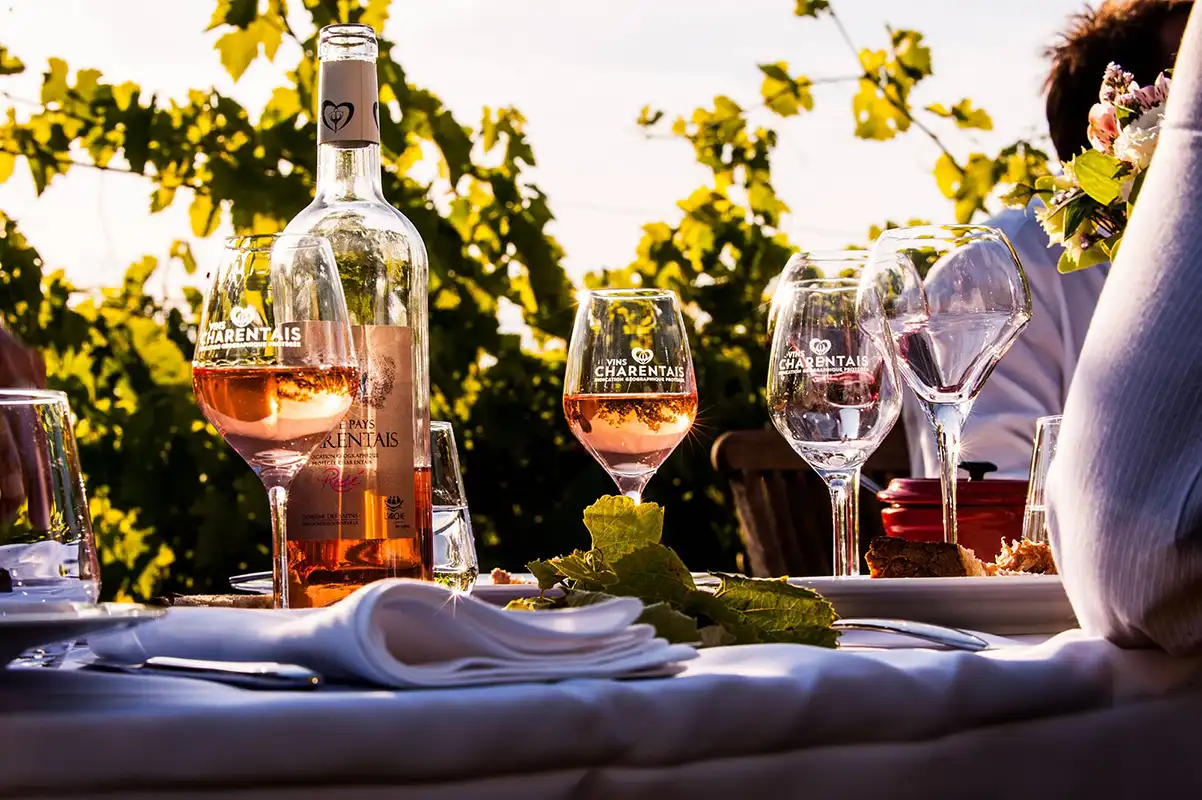
Did you know? With nearly 80,000 hectares of vines, the Charentais vineyard is one of the largest in France. While most of the grapes are used to produce cognac (and pineau), wine production is on the rise. The Charentais PGI (Protected Geographical Indication), which spans most of Charente-Maritime and Charente, includes nearly 600 winemakers. Within the appellation, there are 90 independent estates, 3 cooperatives, and 10 négociants, sharing 1,500 hectares of vineyards. Each year, between 70,000 and 80,000 hectolitres of wine are produced, equating to 10 to 12 million bottles , far from insignificant.
Situated between the Loire and Bordeaux regions, the Charentais vineyard is a land of freedom, blending the best of both. The mild oceanic climate and high sunshine levels create ideal conditions for viticulture. The soils are primarily clay-limestone, with sandier terrain along the coast and on the islands. It’s hard to define a single wine profile due to the diversity of terroirs, but freshness and fruit-forward character are common — a real asset in the age of climate change.
A sign of the times: a Charentais PGI Wine House is expected to open in Cognac in 2023. Meanwhile, the Ugni Blanc grape, heavily used in cognac production, is being excluded from the PGI wine label to avoid confusion between the two products. At the same time, winemakers are experimenting with non-traditional grape varieties, like Burgundy’s Pinot Noir.
Wine tourism is still limited outside the islands, but it’s growing. More and more estates are gaining environmental certifications, like that of François Jobit. In the Arvert peninsula, Jonathan Guillon has taken the bold step of producing high-quality Charentais wines. In southern Charente,Le Petit Cousinaud makes the most of its loamy-sandy soils to craft unique wines, including a rosé highly sought after by fine restaurants. In short, the PGI label has a bright future.
Wine tourism on Ré Island
You don’t have to go far from La Rochelle to find vineyards — they appear soon after crossing the bridge to Ré Island, thriving in the area’s gentle microclimate. The island’s first vines were planted in the 13th century by monks from the Abbaye des Châteliers, who were already making wine back then. Though it has seen its ups and downs over the centuries, viticulture has endured. Since 1951, the Ré Island winegrowers’ cooperative, based in Le Bois-Plage-en-Ré, has been the driving force behind the island’s winemaking revival. Today, it oversees 600 hectares of vineyards, mostly on limestone and sandy soils. Nearly all of the island’s sixty or so winemakers are part of the cooperative, which is uniquely "twinned" with a vegetable-growers’ co-op known for producing the PDO Ré Island potato.
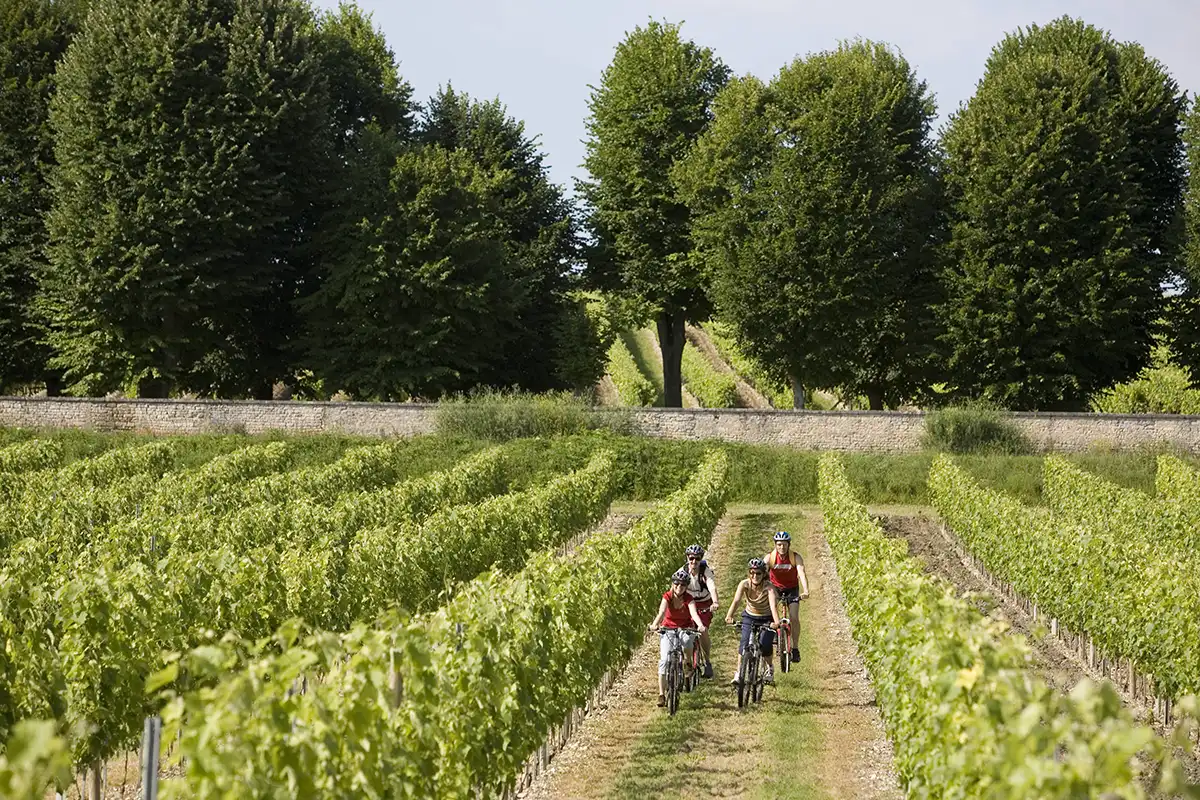
A visit to the winery offers a glimpse into modern cellars and the opportunity to taste the full range of wines made here: crisp and fruity whites, charming rosés, and light reds, including a growing selection of organic wines. Tastings, gourmet aperitifs with local products, and vineyard tours, by bike or horseback, offer visitors a memorable way to experience the Ré Island wines, all with a stunning seaside vineyard backdrop.
Stopover in Oléron, a wine island
Just a short distance from La Rochelle, Oléron Island is the other major wine-producing island of the Charente region. Labeled “Vignobles & Découvertes” (Vineyards & Discoveries), the island’s vineyard spans around 800 hectares. Let’s be clear: white wine is the star here! Though the reds and rosés are also well worth discovering. The most prominent grape varieties are Sauvignon and Colombard, which bring freshness and fruity or citrusy notes.
Oléron’s white wines pair beautifully with Marennes-Oléron PDO oysters, though their culinary potential goes far beyond seafood. In addition to the local wine cooperative, standout producers include Vignobles Favre & Fils and Coulon, both of which have earned numerous awards in recent wine competitions.
Most of the island’s wineries are open to visitors and offer a range of engaging activities, making Oléron an ideal destination for curious wine lovers.
Getaway to Vendée: vineyards of the “Southern Loire”
Less than an hour’s drive from La Rochelle, the Vendée wine region is also well worth discovering. Like in the Charentes, the first vines were planted here during Gallo-Roman times, and once again, it was monks and abbeys that revived viticulture in the Middle Ages. Richelieu, then bishop of Luçon, also played a key role in the region’s wine development and helped popularize its wines.
The Fiefs Vendéens: Southern Loire’s distinct wine identity
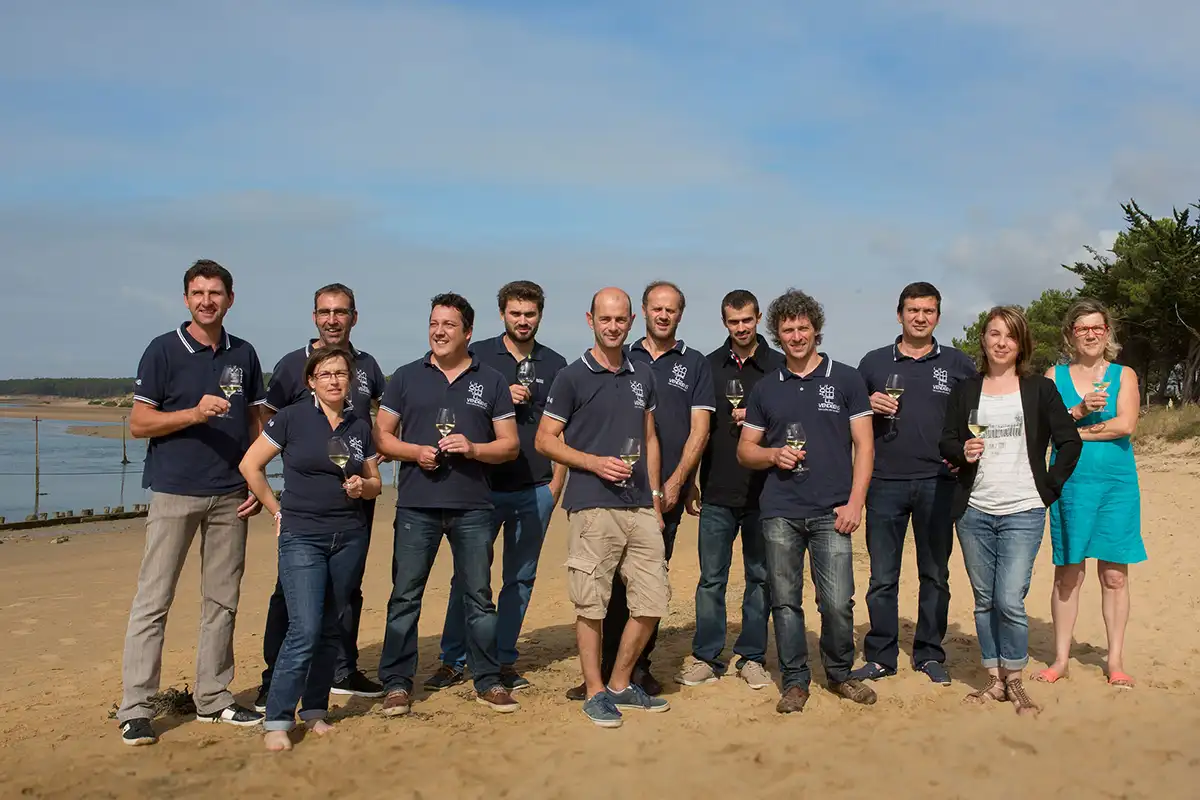
Established in 1965 and granted AOC status in 2011, the Fiefs Vendéens appellation is made up of five distinct terroirs (or “fiefs”): Vix, Pissotte, Mareuil, Chantonnay, and Brem. With diverse soils and varying microclimates, each terroir offers unique wine expressions.
- Vix, located on a limestone islet near the Marais Poitevin, produces powerful, generous, and elegant red wines.
- Pissotte, near the picturesque village of Vouvant, is known for its clay-silica soils.
- Mareuil stands out for its characterful reds and rosés.
- Brem, nestled by the Atlantic Ocean, delivers dry whites, rosés, and charming reds, the maritime influence imparts clear minerality and salinity.
- Chantonnay lies on a carboniferous fault, producing taut and generous whites, and bold, complex reds
There are about 15 winemakers working across the appellation’s 420 hectares, each bringing their unique touch. Notably, rosé accounts for nearly 40% of total production. Environmentally, the vineyard is highly progressive, with many estates certified HVE, organic, or Demeter.
White wines, mainly made from Chenin Blanc and Chardonnay, feature shimmering color, rich floral or mineral aromas, saline or iodized notes, and a subtly creamy finish, particularly in the Chardonnays.
Red and rosé wines are crafted with Pinot Noir, Gamay, Cabernet Franc, Cabernet Sauvignon, and Négrette. The reds are known for their finesse, with silky tannins and a crunchy finish, while the rosés are fresh, light, and sometimes fleshy, perfect summer wines!
The Fiefs Vendéens Wine Route connects all five fiefs and their 15 producers, offering a rich variety of wine tourism activities: tastings, cellar and winery tours, vineyard walks, and more. Highlights include:
- Vignobles Mourat with an engaging wine tourism offer and a fun summer bistro with a food truck.
- Mercier, offering in-depth, themed private tours.
- Château de Rosnay, known for hosting delightful local producer markets.
Wine & spirits shops and cellars

Written by
Jean Tiffon