Coastal foraging
Shore foraging in the La Rochelle area
At low tide, the beaches are revealed, exposing a strip of sand teeming with life: the foreshore. While shore fishing is possible all year round, certain rules must be observed to protect the species living on the foreshore and to ensure your safety.
Where to practice shore fishing?
Popular during spring tides, shore fishing is possible at low tide throughout the year, everywhere it is not prohibited. Here are some recommended spots along our coastline:
- Pointe du Chay (Angoulins)
- Châtelaillon-Plage beach
- The rocky foreshore of Nieul-sur-Mer
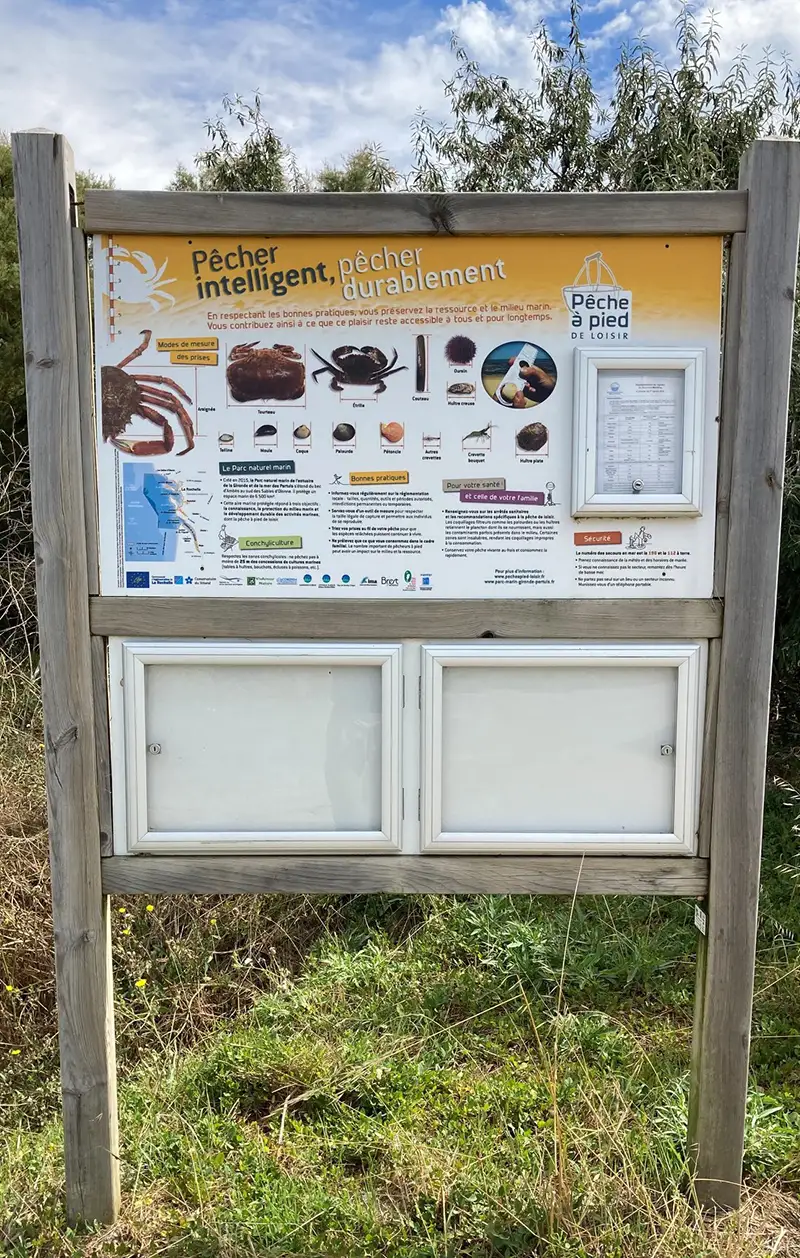
An information panel at the entrance to the beaches reminds you of best practices and any temporary bans.
Preparing properly
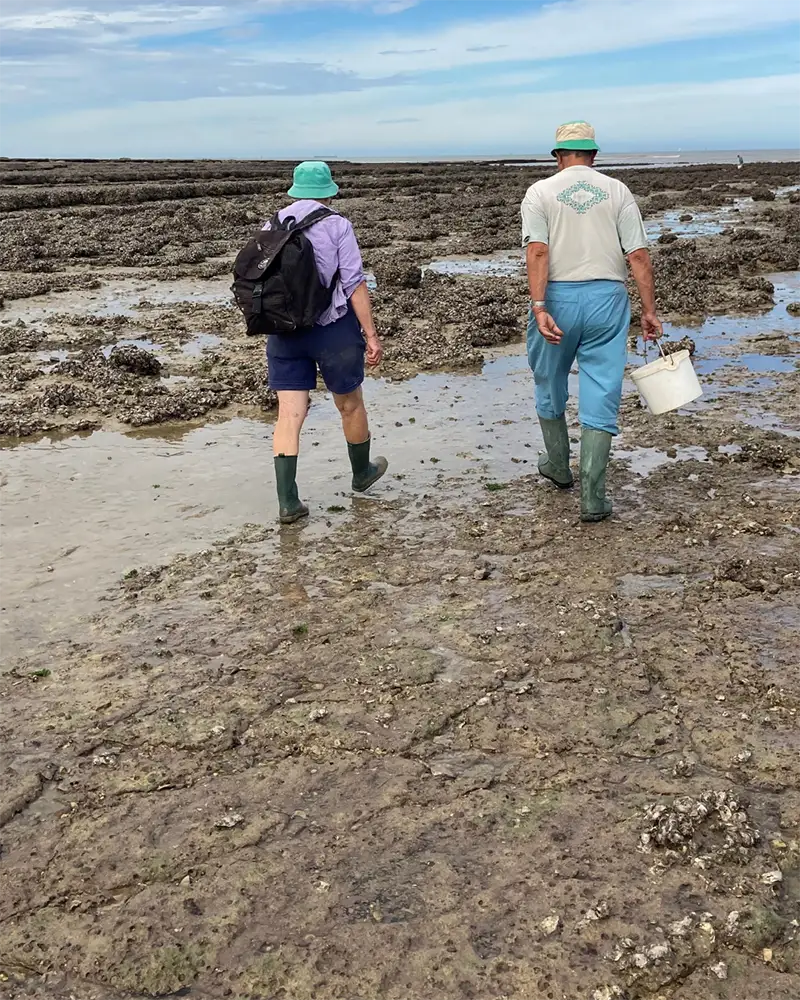
- Check tide times: go out at ebb tide and return before the sea rises.
- Wear boots and use authorized tools (small pick, spoon, etc.).
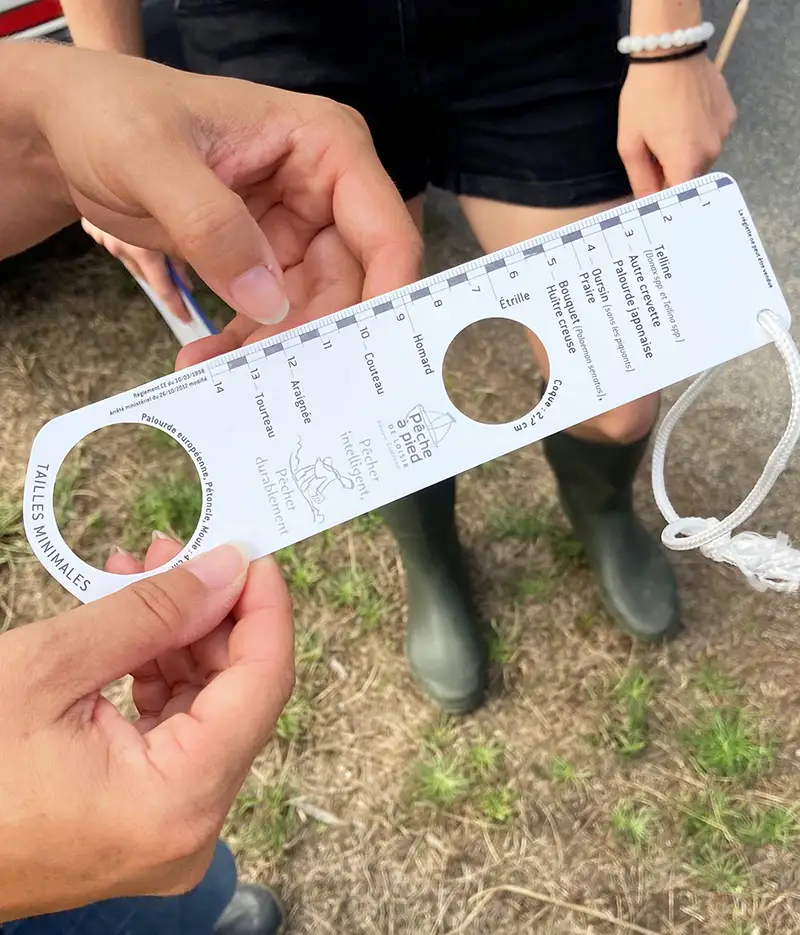
- Pick up a shore fishing gauge at the Tourist Office to check the size of your catch.
- Take only what you will eat and what you know how to prepare.
Prohibited areas
❌ Shore fishing is forbidden in:
- Port enclosures and their surroundings
- Areas within 25 meters of oyster farms, mussel poles, and fish weirs
- Nature reserves such as Moëze-Oléron
- The 9 zones defined by prefectural decree (map below)
For temporary bans, consult the prefecture’s website below.
Good practices
- Respect minimum sizes: species must be able to reproduce.
- Put stones back in their original position: a displaced block may take 3 years to recover its biodiversity.
- Release crustaceans carrying eggs.
- Catch only authorized species, with the correct tools.
- Maximum quantities per tide:
- Oysters: 5 kg
- Cockles: 2 kg
- Clams: 200 units
- Brown shrimps: according to regulations
In case of doubt...
Ask the Tourist Office or the teams from l’Ecole de la Mer, often present on the foreshore. They are there to inform you with a smile!
And before leaving, take one last look at the sign at the beach entrance: it summarises the essentials for responsible shore fishing.